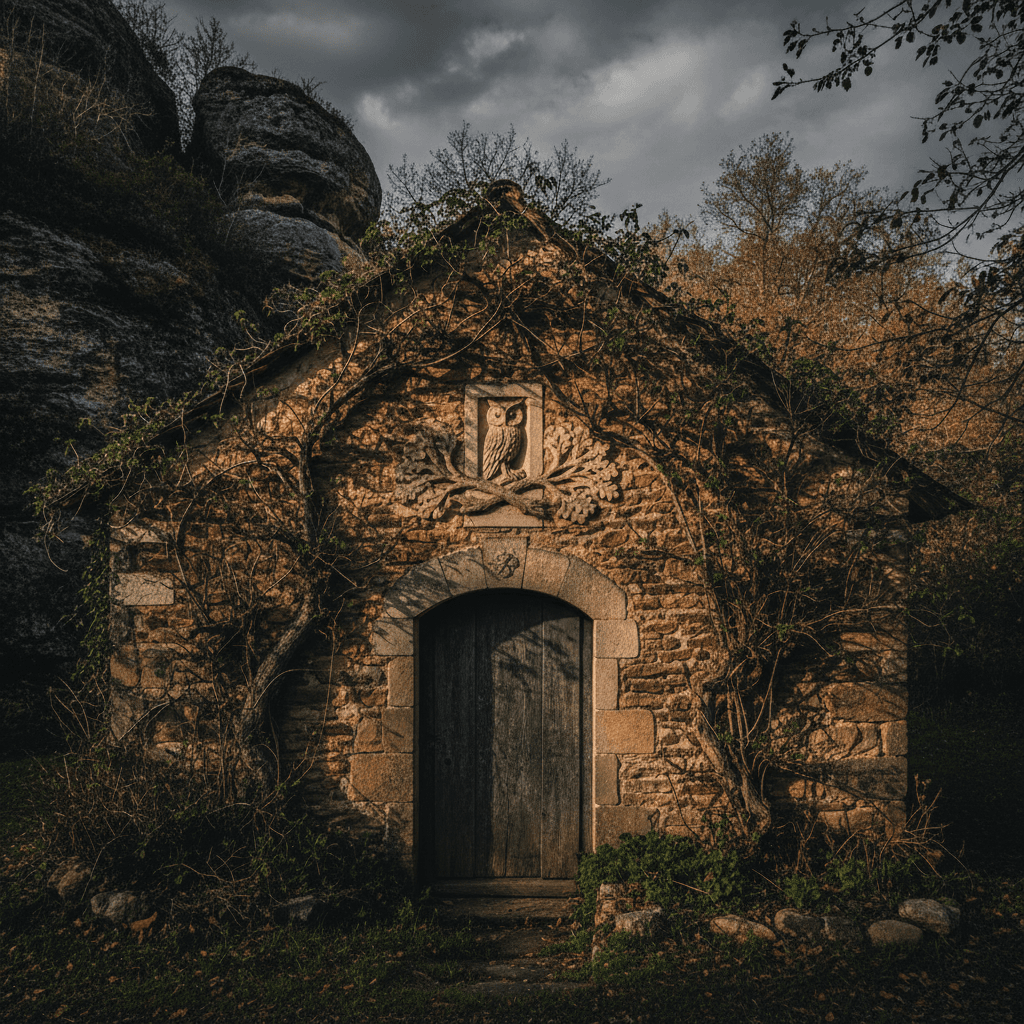
Choosing to slow down perigord gite style allows travelers to swap rushed itineraries for a peaceful, immersive experience in the heart of the French countryside. This deliberate change of pace fosters a deeper connection with local traditions, seasonal food, and the restorative rhythms of rural life.
Most high performers approach leisure with the same relentless efficiency they apply to their careers. You travel across borders only to find yourself checking off sights like items on a spreadsheet, eventually returning home more depleted than when you left. This exhaustion is the result of a nervous system that never truly disengaged from the demands of productivity. At Domaine du Banaret, we understand that true restoration requires a deliberate shift in pace and environment. This guide explores the transformative power of a week spent in a Périgord gîte. You will discover how the specific landscape of Bussière-Badil regulates the brain, why intentional architectural design serves as a therapeutic tool for the senses, and how to implement practical rituals that sustain this newfound clarity long after you depart.
The High-Performance Paradox: Why Traditional Vacations Often Fail
High-functioning professionals often approach time off with the same strategic intensity they apply to their careers. You might meticulously plan a detailed itinerary, hoping that by visiting every historic site and dining at every recommended bistro, you will finally achieve the rest you need. This is the arrival fallacy at work: the psychological illusion that reaching a specific destination or goal will automatically trigger a state of contentment. In reality, the brain does not simply reset because you have crossed a border or checked into a hotel.
When a vacation is treated as a series of tasks to be completed, the nervous system remains trapped in a state of high alert. Frantic sightseeing and constant navigation maintain sympathetic dominance, the branch of the autonomic nervous system responsible for the stress response. Instead of recovering, you return to your desk with the same underlying fatigue you sought to escape. This cycle is a primary reason why traditional holidays fail to address deep-seated burnout.
A different approach is required for genuine restoration. Choosing a slow down perigord gite stay at Domaine du Banaret provides a structured environment for neural decompression. Our restorative holiday gîtes are designed not as mere bases for tourism, but as restorative tools for regulation. By removing the pressure of the traditional itinerary, we allow the body to transition away from chronic stress. This intentional pause is the foundation of our restorative retreats, offering a space where the primary objective is not to do more, but to finally let the nervous system settle into a state of safety and quiet. You can find more free practice resources on our site to begin this transition before your arrival.
The Anatomy of a Week: What Happens to the Brain in Périgord Vert

To understand why a week at a slow down perigord gite is effective, one must view rest through a neurological lens. True restoration is not an instantaneous event, but a biological sequence that requires a specific duration to unfold. When you arrive at Domaine du Banaret, your brain does not immediately mirror the stillness of the landscape. Instead, it follows a predictable three-stage arc of recovery.
During Days 1 and 2, you enter the decompression phase. Even amidst the silence of Bussière-Badil, your nervous system remains calibrated for high-performance output. Your brain continues to scan for notifications, deadlines, and social obligations. This is the period of high residual cortisol; you may feel a sense of phantom urgency or restlessness as your system struggles to downshift from a state of hyper-vigilance. The lack of urban noise in the Périgord Vert can initially feel unsettling because the brain is searching for the friction it has grown accustomed to.
By Days 3 and 4, you encounter the boredom threshold. In our restorative retreats, we identify this as the most critical turning point for recovery. As the constant stream of digital stimuli is replaced by the deep forest-greens and the natural rhythms of the property, the brain's default mode network begins to shift. This stage can feel uncomfortable, yet it is the gateway to parasympathetic activation. Once you stop resisting the quiet, your heart rate variability begins to stabilize and the prefrontal cortex starts to release its grip on executive tasks.
Days 5 through 7 represent the restorative peak. This is when the biological benefits of your stay consolidate. With sustained cortisol reduction and a lowered cognitive load, your brain enters a state of deep repair. The specific sensory profile of our restorative holiday gîtes, from the expansive views to the absence of mechanical clutter, facilitates a neurological reset that is impossible to achieve in a shorter window. This is the phase where creative clarity returns and the nervous system finally settles into a state of safety. You can explore our free practice resources to understand how to prepare for this transition before your arrival.
Living Locally: Finding Stillness in the Bussière-Badil Landscape
The transition from neurological decompression to environmental immersion occurs through the senses. While the southern parts of the Dordogne are often characterized by a high-velocity tourist circuit, the Périgord Vert offers a distinct, unhurried landscape. Here, the environment does not demand your attention; it invites your presence. Choosing a slow down perigord gite in Bussière-Badil places you within a sensory landscape designed for grounding.
The tactile experience of the property is its first therapeutic layer. You might notice the cool, steady temperature of ancient limestone walls, a material that has anchored this region for centuries. This geological permanence offers a stark contrast to the fleeting, digital nature of professional life. Outside, the atmosphere is defined by the scent of damp earth and the sharp resin of pine. In the late afternoon, the light shifts into a soft, honeyed hue unique to this latitude, illuminating the rolling hills without the glare of urban reflection.
True restoration in this context is an active practice of presence rather than a state of total passivity. It involves engaging with the local rhythm through simple, singular tasks. This might look like walking to the village market to select a few seasonal ingredients or sitting on a terrace observing the wind through the oak trees. In our restorative retreats, we frame these moments as grounding exercises that reconnect the physical body to its immediate surroundings. By staying in our restorative holiday gîtes, you engage in a form of environmental therapy where the objective is to do less, but feel more.
The Gîte as a Therapeutic Tool: Design for Nervous System Regulation
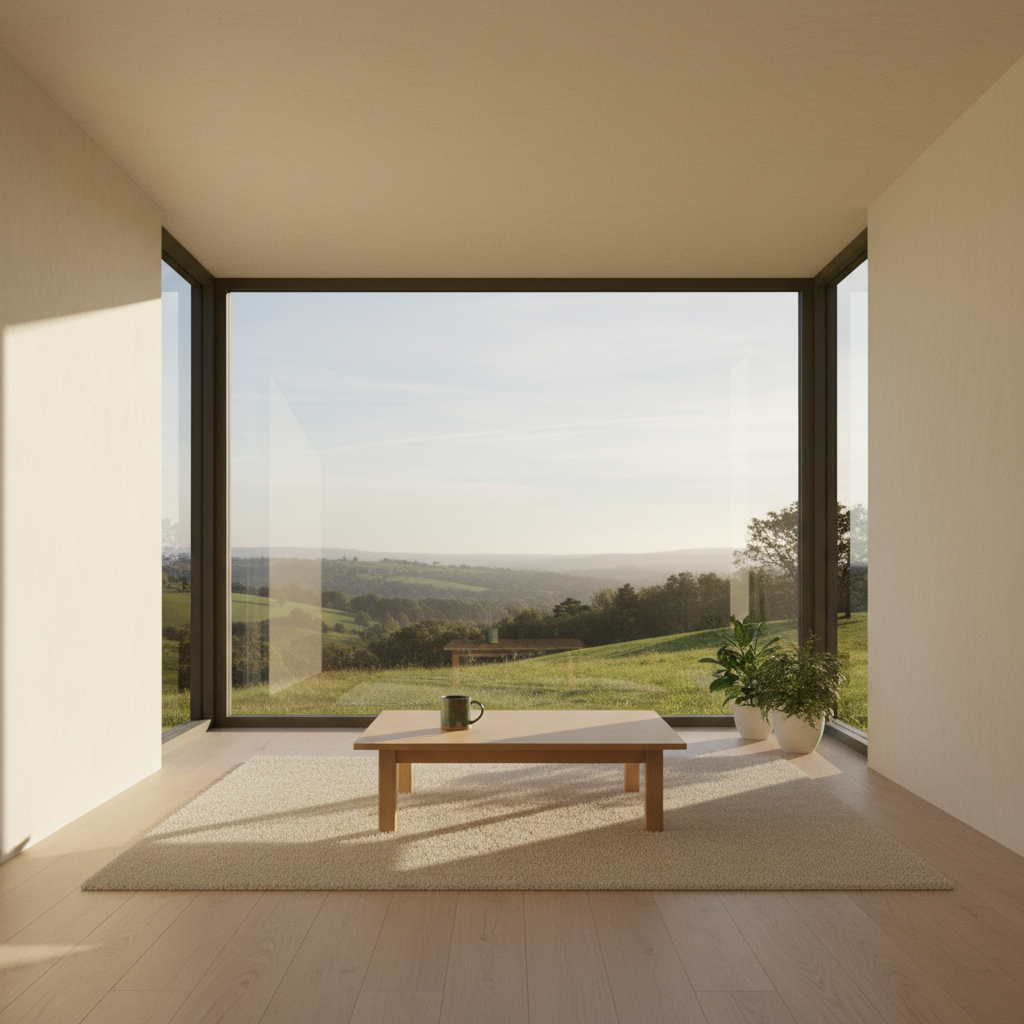
The architecture of a slow down perigord gite serves as a physical extension of the therapeutic process. At Domaine du Banaret, we understand that an overstimulated nervous system requires an environment with low cognitive load. Every design choice in our restorative holiday gîtes is intentional, removing the visual and digital clutter that typically keeps the high-performing brain in a state of micro-analysis. By stripping away unnecessary ornamentation and crowded textures, we allow the prefrontal cortex to rest.
This minimalist aesthetic is anchored by a specific color theory. We utilize a palette of warm-cream and deep forest-green to foster an immediate sense of safety and grounding. The cream tones soften the natural light, preventing the harsh glare that can trigger sensitivity in those experiencing chronic stress. The forest-green elements provide a psychological bridge to the ancient trees outside, reinforcing the brain's connection to the biological world.
Spaciousness in our layout is not merely an architectural luxury; it is a restorative requirement for internal reflection. When the external environment is open and predictable, the mind can finally settle into a quieter, more centered state.
Practical Rituals for Your Stay: Beyond the Itinerary
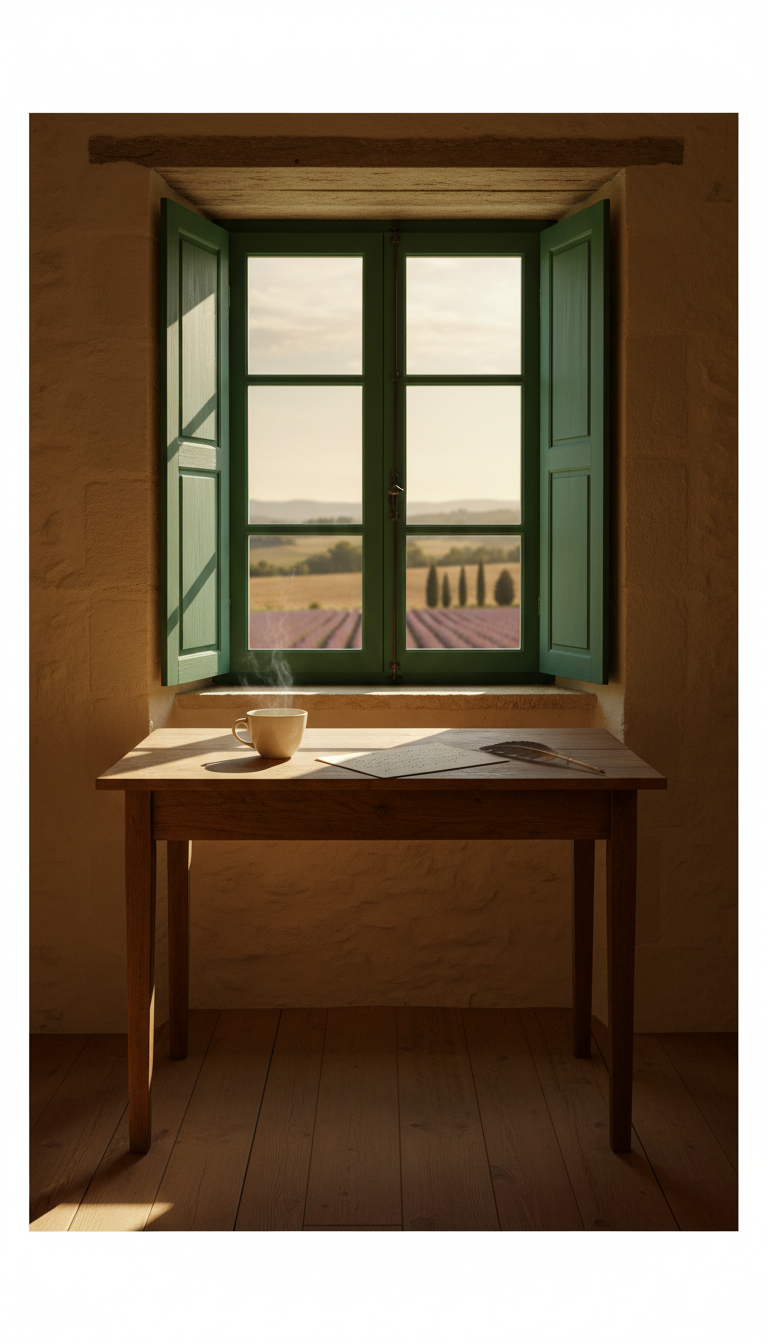
To maximize the restorative potential of a slow down perigord gite stay, one must transition from an action orientation to a sensory orientation. This shift is not passive; it is an active restorative practice designed to rebuild the capacity for sustained attention. Rather than compiling a list of sights, we encourage the adoption of simple, repetitive rituals that anchor the nervous system in the present moment.
Begin your day with fifteen minutes of morning tea by a south-facing window. The objective is not to plan the day, but to practice open monitoring, observing the subtle shifts in light and shadow across the limestone walls. This simple act helps calibrate the circadian rhythm and reduces the morning cortisol spike common in high-stress professionals. For those who find stillness difficult, our free practice resources offer guided techniques to facilitate this transition.
Replace the afternoon drive with a slow, sensory walk through the oak woods of Bussière-Badil. Focus exclusively on the tactile feedback of the ground beneath your feet or the specific sound of the wind in the canopy. In our clinical wellness retreats, we use this bottom-up processing to bypass the analytical mind and engage the body’s innate relaxation response.
End the day with sunset journaling on the terrace of our restorative holiday gîtes. By manually writing down reflections, you engage in a motor task that helps the brain process the day’s internal shifts. These rituals are the foundation of how to be during your stay, ensuring that the environment becomes a partner in your recovery.
Bringing the Périgord Peace Home: The Lasting Impact of a Reset
The transition back to a high-pressure environment is the ultimate test of a restorative reset. A week spent at a slow down perigord gite serves as more than a temporary reprieve; it functions as a neurological blueprint for an internal sanctuary. By immersing yourself in the stillness of our restorative holiday gîtes, you develop a heightened sense of interoception, the ability to perceive the internal state of your body. You begin to notice the subtle physiological markers of stress, such as a tightening in the chest or a shallowing of breath, long before they escalate into chronic exhaustion.
This refined awareness is essential for professionals navigating high-stakes environments. The clarity gained at Domaine du Banaret provides the perspective needed to implement more effective professional boundaries. You carry the memory of the Périgord Vert's expansive silence as a reference point for your own mental load. This makes a stay in our restorative retreats a strategic investment in sustainable performance rather than a simple luxury. To help sustain this state, we provide free practice resources designed to integrate these restorative insights into your daily life.
Embracing the slow pace of life in the Périgord is about more than just a change of scenery. It is an invitation to rediscover a sense of presence and tranquility that often feels lost in our modern world. If you want expert help in finding the right space to facilitate this personal reset, we are here to assist. Choosing the perfect retreat should be as peaceful as the stay itself. Explore our selection of Holiday Gîtes to begin planning your own quiet escape into the French countryside.